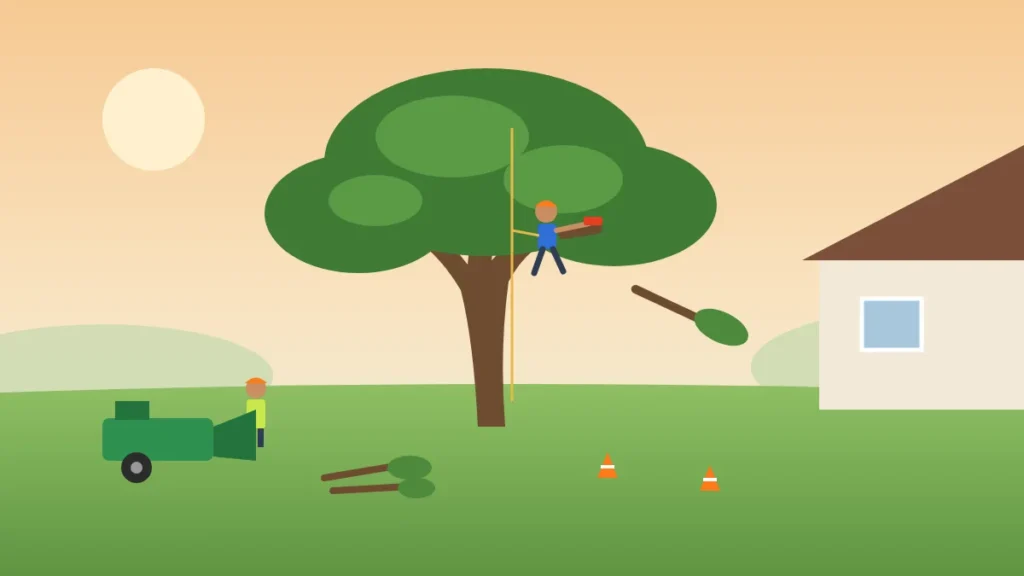
What’s a fair tree trimming cost in 2026? Most homeowners pay a few hundred dollars per tree, but the real price depends on height, species, access and how much work the tree needs. This guide breaks it all down so you can read a quote with confidence.
Last updated: November 2026 · Reading time: 9 minutes
Maybe a big oak is hanging over your roof, the crape myrtles out front have gotten out of hand, or you’ve noticed dead branches high in a pine. Trimming keeps trees healthy and keeps limbs off your house, car and power lines. Before you call anyone, it helps to know what the work usually costs and what drives the price up or down.
Quick answer: Tree trimming usually costs about $175 to $750 per tree, with a national average of around $450, according to Fixr. Lawn Love’s 2026 guide puts most jobs at $412 to $612 per tree. Small trees under 30 feet can cost under $100 to about $400, while very tall trees over 60 feet can run $1,500 or more.
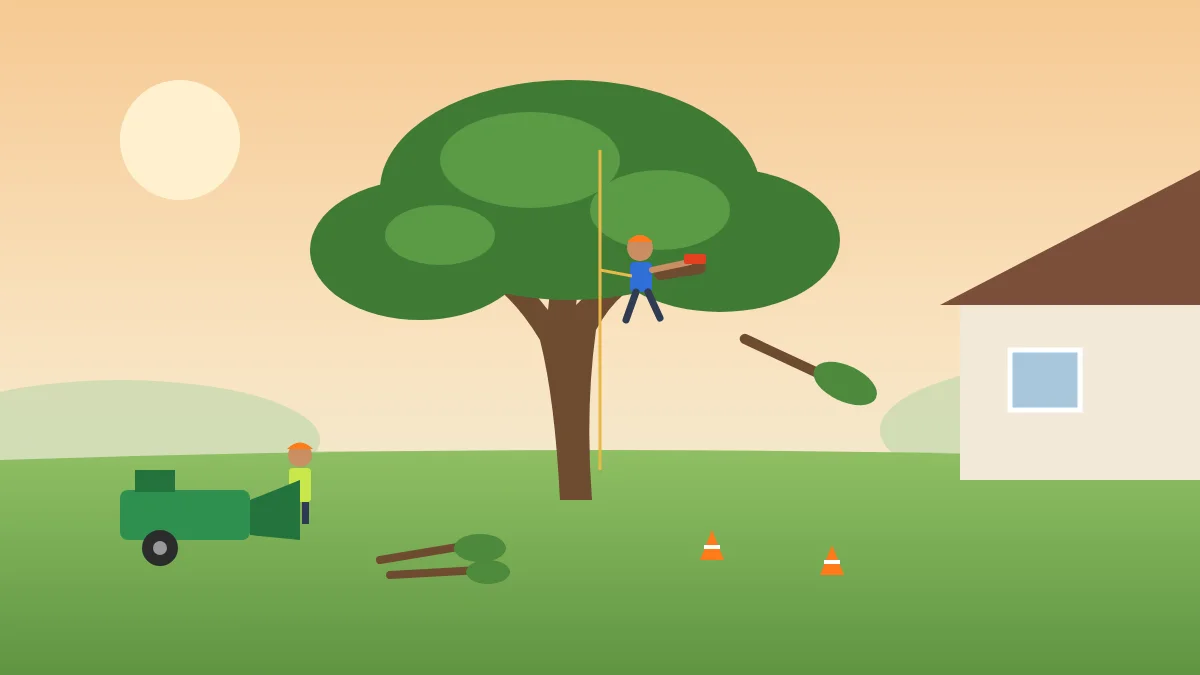
Average Tree Trimming Cost in 2026
Two of the most widely used home-cost guides publish national figures. They don’t match exactly, which is normal, because they use different data, but they land in a similar range:
| Measure | Typical cost | Source |
|---|---|---|
| National average per tree | About $450 | Fixr |
| Typical range per tree | $175 – $750 | Fixr |
| Most common range per tree | $412 – $612 | Lawn Love (2026) |
| Full range seen | $80 – $1,840 | Lawn Love (2026) |
| Hourly labor | $50 – $80 per worker per hour | Fixr |
| Emergency surcharge | About $50 – $200+ extra | Fixr |
Sources: Fixr tree trimming cost guide and Lawn Love tree trimming cost guide (2026). Local prices vary, so treat these as a starting point and compare real quotes.
Need a tree removed?
Compare 1733 local tree companies and get free quotes.
Tree Trimming Cost by Tree Height
Height matters more than anything else. Taller trees need climbing gear or a bucket truck, more crew time and more careful rigging to lower limbs safely.
| Tree height | Fixr estimate | Lawn Love estimate |
|---|---|---|
| Small (up to about 20–30 ft) | $75 – $300 (10–20 ft) | $80 – $420 (under 30 ft) |
| Medium (about 20–60 ft) | $150 – $450 (20–30 ft) $150 – $800 (30–50 ft) |
$210 – $790 (30–60 ft) |
| Large (over 50–60 ft) | $300 – $1,800 (50–100 ft) | $470 – $1,840 (over 60 ft) |
If you have one very tall tree and several small ones, ask for a per-tree breakdown. It makes comparing quotes much easier.
Tree Trimming Cost by Tree Type
Species changes the price because some trees grow tall, spread wide or have hard wood, and some (like palms) need a different kind of trimming altogether.
| Tree type | Fixr estimate | Lawn Love estimate |
|---|---|---|
| Crape myrtle | $75 – $400 | $80 – $350 |
| Palm | $100 – $1,500 | $100 – $1,330 |
| Cypress | $150 – $1,200 | $150 – $1,200 |
| Oak | $175 – $1,500 | $230 – $1,480 |
| Pine | $200 – $1,800 | $210 – $1,630 |
Palm trimming is its own specialty: crews remove dead fronds, seed pods and loose “boots,” often working high off the ground. If you’re in Florida, Arizona or California, see local companies that offer palm tree trimming. Thinking about taking a palm out instead? Our palm tree removal cost guide breaks down prices by height.
What Affects Tree Trimming Cost?
- Height and spread: taller and wider trees take longer and need more equipment.
- Type of pruning: a light cleanup of deadwood costs less than crown thinning, crown raising or structural pruning.
- Tree health: dead, diseased or storm-damaged limbs are riskier to remove and take more care.
- Access: backyards with no truck access, steep slopes or tight spaces mean more climbing and hand-carrying.
- Proximity to hazards: limbs over roofs, pools or power lines need careful rigging. Work right next to energized lines is usually handled by the utility.
- Number of trees: trimming several trees on one visit usually lowers the cost per tree.
- Cleanup and hauling: confirm whether branches are chipped and removed or left for you.
- Timing: emergency calls after storms cost more than scheduled work.
Types of Tree Trimming (and Why They’re Priced Differently)
“Trimming” covers several different jobs. Knowing the names helps you understand a quote:
- Deadwooding: removing dead, dying and broken branches. Often the simplest and cheapest job.
- Crown thinning: selectively removing branches inside the canopy so light and wind can pass through. Helpful for big shade trees before storm season.
- Crown raising: removing lower limbs to clear a driveway, sidewalk, roof or view.
- Crown reduction: carefully shortening the overall size of a tree by cutting back to healthy side branches. Takes skill and costs more.
- Structural pruning: shaping young trees so they grow strong. Usually inexpensive and saves money later.
Avoid any company that recommends “topping” (cutting the whole top off a tree). Arborist organizations such as Trees Are Good, the consumer site of the International Society of Arboriculture, publish guidance on why topping harms trees.
How Often Should You Trim Your Trees?
There’s no single schedule, but these rules of thumb work for most yards:
- Young trees: light structural pruning every couple of years while they’re establishing.
- Mature shade trees: an inspection and trim every few years, or sooner if you see dead limbs.
- Fast-growing or problem trees near roofs and lines: check them every year.
- After any major storm: look for cracked or hanging limbs right away.
Many arborists also avoid removing too much live canopy at once, because heavy pruning stresses a tree. A good company will explain how much it plans to cut and why.
When Is the Cheapest Time to Trim Trees?
For most deciduous trees, late winter or the dormant season is a good time to prune: the branch structure is easy to see and crews are often less busy than in spring and after summer storms. Booking outside peak storm weeks can help you avoid emergency pricing. Some species and regions have different best times, so ask a local arborist.
Tree Trimming vs. Tree Removal Cost
Trimming is usually far cheaper than removal. For comparison, Lawn Love’s 2026 data puts the national average for a standard tree removal at about $850. If a tree is healthy and well placed, trimming is almost always the better value. Removal makes sense when a tree is dead, badly damaged, diseased or too close to your house to keep safely. If you do remove a tree, budget for the stump too. See our stump grinding cost guide.
Should You Trim Trees Yourself?
Small shrubs and low branches you can reach from the ground with hand pruners or a pole saw are reasonable DIY jobs. Anything that needs a ladder and a chainsaw, branches over your house, or work near power lines is a job for an insured professional. Falls and chainsaw injuries are serious, and a falling limb can cost far more than the trimming quote you were trying to avoid.
How to Get a Fair Tree Trimming Quote
- Count and photograph the trees you want trimmed and note their approximate height.
- Describe the goal: clear the roof, remove deadwood, thin the canopy, raise limbs over the driveway.
- Get at least three written quotes that list each tree, the type of pruning and cleanup.
- Check insurance: ask for proof of liability and workers’ compensation coverage.
- Ask who does the work and whether a certified arborist is involved for larger or valuable trees.
Our guide on how to find a trusted tree service walks through the questions to ask before you hire.
Ways to Lower Your Tree Trimming Cost
- Bundle several trees, or join with a neighbor, so the crew handles more on one visit.
- Schedule routine trimming in the off-season instead of waiting for storm damage.
- Keep the chips as free mulch instead of paying for hauling.
- Prune young trees early. Cheap structural pruning now prevents expensive problems later.
- Clear access for the crew: move cars, furniture and toys before they arrive.
Own oak trees? Timing matters for more than price. Pruning oaks during the spring high-risk season can open wounds to a deadly fungal disease — see our guide to oak wilt signs, treatment and safe pruning windows before you book.
Frequently Asked Questions
How much does it cost to trim a tree?
Most homeowners pay about $175 to $750 per tree, with a national average around $450 according to Fixr. Lawn Love’s 2026 data puts most jobs at $412 to $612 per tree.
How much does it cost to trim a large tree?
Trees over about 60 feet commonly cost $470 to $1,840 to trim, per Lawn Love, and Fixr lists $300 to $1,800 for trees from 50 to 100 feet tall.
How much do tree trimmers charge per hour?
Fixr lists about $50 to $80 per hour per worker. Most companies quote per tree or per job rather than by the hour.
Is tree trimming cheaper than tree removal?
Usually, yes. Trimming a typical tree costs a few hundred dollars, while the national average for a standard tree removal is about $850, according to Lawn Love.
What is the best time of year to trim trees?
For many trees, late winter or the dormant season works well, and crews are often less busy then. Check with a local arborist, since timing can depend on the species and your region.
Does homeowners insurance pay for tree trimming?
Generally no. Routine trimming and maintenance are the homeowner’s responsibility. Insurance typically applies only when a covered event, like a storm, causes damage.
Find Tree Trimming Near You
Tree Removal Finder lists local companies that offer tree trimming and pruning across the U.S. Compare companies in your city, call them directly, or send one free quote request.